Here’s a quote from Dr. James Di Nicolantonio that, barring unforeseen injuries or illness, is spot on and exactly aligned with the Age Free Strength mindset.
“The beauty of being in good shape is that you earned it. It cannot be handed down like a business or wealth. No one puts in the work except you. It’s the ultimate form of self-care and respect”
Consistency
Building and maintaining strength and vitality, as we age, requires a positive attitude, dedicated and ‘appropriate’ effort, a lot of consistency and a willingness to learn and adapt.

Consistency is the key ingredient. It’s not about quick fixes or temporary solutions, but rather a commitment to a healthy and active lifestyle that lasts a lifetime. It’s about making a conscious choice every day to prioritize your well-being and invest in yourself.
But what does consistency really mean? It means showing up for yourself, both physically and mentally, day in and day out. It means dedicating time to exercise regularly, fueling your body with nutritious food, and prioritizing self-care.
Consistency is about creating positive habits that become second nature and engrained in your daily routine.
Of course, staying consistent can sometimes be a challenge. Life gets busy, unexpected obstacles arise, and motivation may ebb and flow. That’s why it’s important to find strategies that work for you, so you enjoy your journey towards strength and vitality – this is what Age Free Strength is all about.
Before we venture into workouts and programs, please make sure you get medical clearance, especially if you are new to resistance training or coming back to it after a long lay-off.
Lets Start the Journey – Strength Training As We Age
At Age Free Strength, we will teach you how to exercise safely, while building and maintaining strength, muscle and mobility.
With our portable equipment we apply exercise science principles to our workouts – whether you are at home, in a hotel room or a campsite.
This post sets the scene for all future posts, with the ‘science’ explained in simple terms and for the Members only workout routines. Stick with it and you will reap the benefits.
This post is an introduction to strength training as we age, but it is applicable to men and women of all age groups.
The Age Free Strength Approach for Optimal Exercises and Portable Routines Can be Found in the Following Links.
- The AD‑Curve™ Free Post (concept overview)
- The AD‑Curve™ YouTube overview (visual demonstration)
- The AD‑Curve™ eBook (full system explanation) – down load with Membership
The Myths
The Strength and Muscle Industry, much like numerous other industries, is long overdue for a disruption. The vast expanse of the internet and countless magazines inundate us with dogma, fitness ‘influencers’ and unrealistic outcomes – driven by the intent of garnering attention or maximizing financial gains.
This dogma includes:
- You must lift with heavy weights and do compound (multi-joint) exercises to get strong and build muscle
- Compound exercises are better for building strength and muscle growth than isolation (single joint) exercises
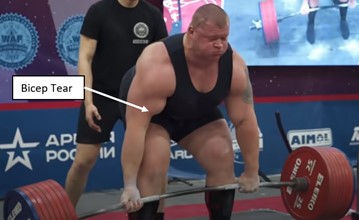
There is a lot more exercise dogma that we will delve into in future posts but, for this introduction, let’s address the above points.
Lifting with Heavy Weights and Compound Exercises
Of all the exercise dogma, this one is the most prevalent. It is also a cause of exercise related injuries.
Before moving on - there is nothing 'wrong' with heavy compound exercises if your goal has a 'powerlifting' focus. All exercise varieties, all workout types and all programs work to some degree, providing consistency, correct form and recovery is maintained - but not all are suitable for the purpose.
If you are maturing with age (or not) and your goal is to build strength and muscle, without injury, you do not need to lift ‘heavy’; or go all out to failure on every set; or predominately do compound exercises; or use traditional barbells, benches or commercial gym equipment.
There is a well-known quote from Lee Haney, 8 times Mr. Olympia (his last win in 1991) –“stimulate, don’t annihilate”. Born in 1959, Lee is one of the few famous bodybuilders that is relatively injury free, in great shape and still working out (Lee is the same age as me).
For the purposes of this website, heavy lifting is defined as a resistance that limits a ‘set’ to 1 to 5 repetitions (reps) and stopping when you cannot do another rep with perfect form.
At Age Free Strength, we will teach you how to make a moderate resistance 'feel' heavy as a pathway to lose fat, improve body composition, increase strength and build muscle - safely. Our 15 to 40 minute workouts can be done anywhere, with portable equipment that weighs 5kg in total and can fit into an average sized backpack.
Five of the common compound exercises are listed below (there are more), most of which come with injury risk, none of which provide optimal target muscle activation while all require relatively heavy weights to adequately stimulate the primary muscles involved.
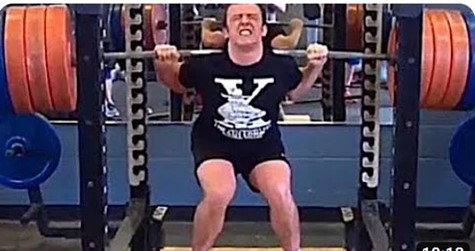
- Barbell Squat – mostly for quadriceps and glutes
- Barbell Deadlift – mostly for glutes, hamstrings and lower back (the lower portion of the erector spinae which runs up the entire back)
- Barbell Bench Press – mostly for the chest (pectorals)
- Barbell or Dumbbell Overhead Press – mostly for the shoulders (deltoids) – see this post for insights into the overhead press and optimal shoulder exercises
- Barbell Bent Over Row – mostly for the back (latissimus dorsi and middle trapezius)
In future posts we will summarize these and many more exercises from a bio-mechanics / anatomical motion, physics and neurology perspective and then provide optimal exercise options with moderate weight resistance.
For example, the Barbell Bench Press is one exercise almost everyone does or has done in the gym or at home and is generally considered the best chest exercise.
The heavy barbell bench press is a classic case of exercise dogma and does not make it into our optimal exercises list.
When you look at the pectorals (the primary chest muscle is the pectoralis major – there is a pectoralis minor) in terms of the origin, insertion and muscle fiber directions you will see that the function of the pectorals is to move the arms in front and across the chest.
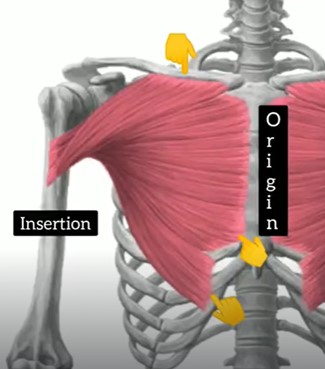
In the image above you see that there is one insertion point on the upper arm bone (humerus) and three origin points – the clavicular (under the collar bone), the sternal (down the sternum) and the costal (lower rib cartilage). The sternal origin houses by far the majority of fibers.
As you raise your upper arm towards shoulder level all fibers run horizontal and, mostly, angled downwards.
All muscles ‘pull’ from their insertion towards their origin. To optimally load a target muscle, with joint safety, the following principles apply:
- The exercise motion must align with the insertion to origin motion in the direction of the majority of the muscle fibers (biomechanics)
- The resistance curve, ideally, should match the muscle strength curve – with muscles having a greater contraction capacity in their lengthened position the resistance should ideally be higher in the first 40% of a full range of motion (physics, exercise selection and exercise form).
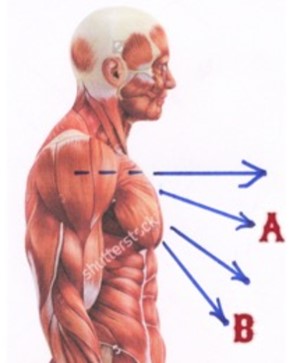
In the image above you see that the optimal motion, to engage the majority of fibers, is down between the ‘A’ and ‘B’ arrows. Neither a flat, or even less so, an incline bench press, provide the optimal anatomical motion.
Exercises where the arms move, relative to the torso, between the ‘A’ and ‘B’ arrows and from out to in is the optimal motion. These would be a decline dumbbell bench press (in the gym) or, in our case with our minimal equipment, a cable and/or resistance bands converging press, where the correct arm motion relative to the torso is achieved (see example super-set below).
With the barbell bench press the hands are locked in position and therefore cannot move across the chest. If oil were placed on the bar the hands would tend to slide apart, not towards each other. This results in a ‘less than ideal” anatomical motion with an unnatural strain on the shoulder joint.
Shoulder joint pain or injury are a common by-product of heavy barbell bench presses.
So, what chest exercises do we recommend at Age Free Strength?
- A converging press (AD-Curve Protocol) with the hands a bit wider than shoulder width and with the movement starting just below the collar bone and finishing with the hands together just above the sternum
- A decline dumbbell press if you have the equipment. Note that the focus of Age Free Strength is exercising while travelling, vehicle touring and camping and we do not go into a lot of detail with typical gym weights and equipment
- Bodyweight pushups as a pre-exhaustion and/or finisher exercise
Not an Affiliate link
Compound Exercises verses Isolation Exercises
At Age Free Strength not all of our optimal exercises or our preferred exercise options are purely isolation exercises, however, all of our exercises are ‘optimal’ due to the anatomical motion, safety, efficiency and effectiveness.
It’s important to understand the difference between ‘lifting heavy weights’ and ‘optimally loading a target muscle’.
An individual muscle can be loaded MORE, with a lighter resistance – if it is not assisted by other muscles, if it has better alignment, if the resistance curve is more ideal, or if a longer ‘lever’ is being used (physics). Conversely, an individual muscle could be loaded LESS during a compound exercise – even though a heavier weight is being lifted – because of these variables.
A person who is unfamiliar with biomechanics might naturally assume that exercises which allow them to lift a heavier weight, would produce more “mass” (i.e., larger muscles). But this is an incorrect assumption.
A muscle that is participating in a compound exercise is being assisted by other muscles (sometimes with conflicting muscle groups), in the lifting of that weight. A unified effort (multiple muscles participating simultaneously in one lift) will naturally allow a heavier weight to be lifted. But, each participating muscle may not be working at its individual maximum capacity.
Often, during a Compound Exercise, a muscle we most want to prioritize is less loaded than a muscle which we do not want to prioritize, due to the mechanics of that particular exercise. However, each muscle can be fully loaded (with spine, joint and ligament safety) and be worked with 100% efficiency, using an isolation exercise – even though the resistance used would be lighter than that used during a compound exercise.
Muscles don’t know what exercise is being done or what weight is being used, they only know what force they need to exert to overcome a resistance. If a lighter weight provides more direct load to a target muscle, then the muscle resisting that load will grow and get stronger.
At Age Free Strength we refer to Doug Brignole’s ‘The Physics of Resistance Exercise’ (which goes into a lot of scientific detail) for many of our optimal exercises, which are a mix of isolation and compound exercises. An objective of this website is to keep the science simple so we will summarize the relevant principles of Doug’s work, hopefully with easy to understand content and where they are directly related to our protocols.
For those of you interested in deep diving into the science we can recommend the following Doug Brignole/Moe Larbi/SmartTraining 365 program links:
The Age Free Strength Workout Protocols
We will go into some detail in the next post with examples in how we workout ‘on the road’ – vehicle touring and camping – with specific equipment. Note that this equipment is all you need for a home gym also.
For this post we will summarize our workout protocols to set the scene.
Strength Training Without Chasing Heavy Weights
As detailed in the Sections above, a common gym myth is that lifting very heavy weights with traditional compound exercises is the only way to build strength and muscle.
At Age Free Strength, we take a different — and more sustainable — approach.
Rather than chasing maximal loads, we focus on moderate resistance applied intelligently using:
- Optimal exercise selection (Biomechanics)
- Precise resistance direction (Biomechanics)
- Efficient set structures (Muscle Physiology)
- Shorter, focused workouts (Rest/Pause Protocol)
Research consistently shows that moderate loads performed with a rest/pause protocol, stimulate muscle growth and strength when applied correctly — at least the equal of heavy training while placing far less stress on joints and connective tissue.
If your primary goal is competitive powerlifting, this approach may not suit you.

If your goal is to safely build and maintain muscle, strength, mobility, and resilience — anywhere — you are in the right place.
How This Is Applied in Practice
Rather than detailing every protocol here, the practical application of this approach is explained and demonstrated through the AD‑Curve™ framework:
- How resistance can feel challenging without being excessive
- How cables and bands are combined to match muscle strength curves
- How workouts are kept efficient without sacrificing results
These principles are covered in detail in the following links:
- The AD‑Curve™ Free Post (concept overview)
- The AD‑Curve™ YouTube overview (visual demonstration)
- The AD‑Curve™ eBook (full system explanation) – down load with Membership
Note that we all have differences in terms of our individual biomechanics, how we respond to exercises and intensity / recovery thresholds. We will delve into these aspects in future posts and our memberships section.
Next Post
Stay tuned for the next post which will be a more comprehensive study on how we workout on the road while vehicle touring, camping and trekking.
Very thorough. Thanks for the tips.
Thanks Austin, more to come
Thanks for sharing this informative post regarding Unitree Pump is really helpful when doing exercise anywhere
Thanks for sharing this informative post regarding Unitree Pump is really helpful when doing exercise anywhere.
Thanks for the comments Deepa. The Pumps really are brilliant. More posts coming up soon.